This is not a theory or a far-off future prediction. DineIN is running in major hotels today, delivering value to hoteliers and their guests, and offering an elegant exit to traditional roomservice. Developed and implemented by Hotel Communication Network (HCN), the service rescues hotels with full-service classification where roomservice has become a loss leader.
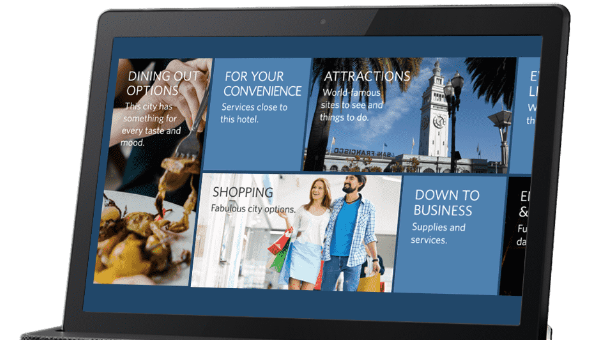
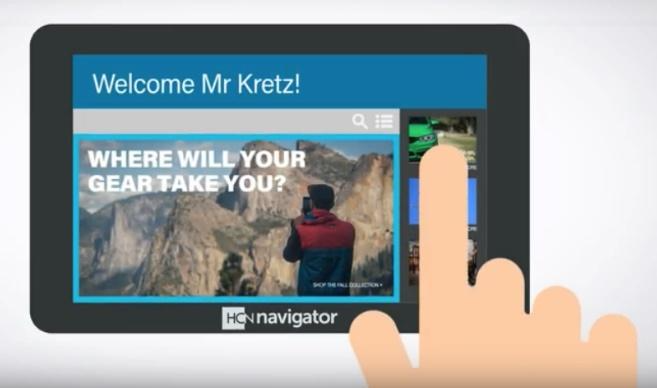
For example, one of HCN’s current customers was losing considerable revenues each month through their prior roomservice model. The 1,500-room branded hotel is a popular destination for meetings and events and attracts business travelers from across the globe. It features multiple restaurants, a lobby lounge, a breakfast venue, and considerable event space; it also features interactive HCN Navigator tablets in each room. Although each F&B venue was thriving, roomservice was suffering. To recoup lost revenues, I suggested that they try DineIN.
First, the hotel was asked to identify up to six local restaurants that matched the demographics of the property and the expectations of its guests (five-star restaurants to service the five-star hotel); that was the extent of the hotel’s involvement. The eateries’ each have exceptional reviews for quality and service, and their kitchens have the capacity to accommodate twice the volume of diners they serve in house. Next, we worked with each restaurant to create custom content and graphics and upload the menus to the hotel’s tablets. Finally, we hired a delivery crew and established a security protocol with management so hotel staff know who is delivering food and drivers know where to park and which door to enter. This type of collaboration is key to f&b delivery success.
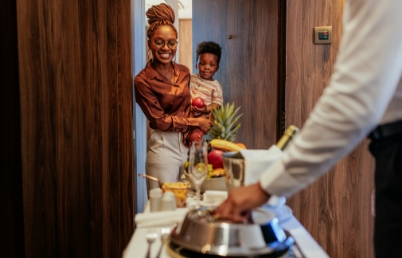
As a result, hotel guests are happy and writing positive reviews because they are experiencing the flavor of the city through streamlined foodservice delivery that is billed directly to their rooms.
But wait, there’s more . . .
With DineIN for restaurants, hotels also receive a 24/7 help desk to provide guests with full-service support along every step of their dining experience. If a guest is not happy with their meal (which has yet to happen), they will get a full refund.
While having tablets in rooms is a prerequisite to offering DineIN, the value-added benefits to hotels are astounding. In addition to in-room dining, tablets are serving as the control center of the guestroom — not apps, not TVs. They send message alerts, give guests housekeeping options, controls the room environment (lights, drapes, temperature, Do Not Disturb, and TV), streamline check out, sends surveys, promote in-house events, share loyalty club information, facilitate service requests, charge guests’ personal mobile devices, and provide alarm clock functionality.
If these reasons aren’t compelling enough to persuade you to add in-room tablets and outsource your struggling roomservice operation, then try this on for size. DineIN will put hotels in a profit position from the first month in-room tablets are installed. So, whether you are a limited-service hotel wanting an in-room dining option or a full-service hotel looking to stop the bleeding from your existing roomservice model, DineIN will metaphorically have guests eating out the palm of your hand with no risk, just reward.